Article Shares

Article Commentary

Curated insights on pivotal scholarship and reports shaping disability-inclusive practice across higher education contexts.
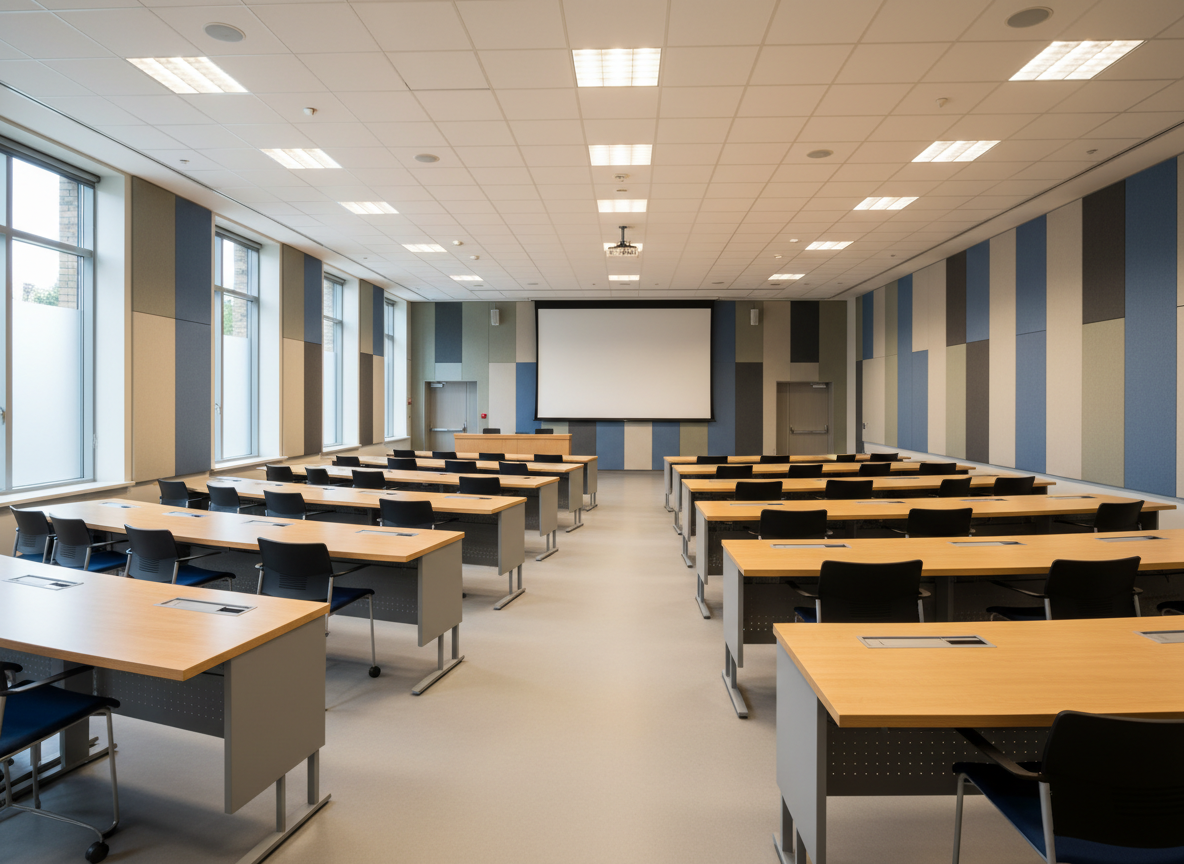
A meticulously organized, wheelchair-accessible lecture hall captured in photographic realism. Sleek, adjustable-height desks with smooth maple surfaces form gentle arcs facing a large, matte-finish projection screen. Wide, clearly unobstructed pathways wind between rows, and several desks are designed with extra knee clearance and flexible layouts. Soft afternoon daylight filters through tall windows with frosted glass, complemented by warm recessed ceiling lights that cast gentle, even illumination without glare. The mood is calm, thoughtful, and sophisticated, emphasizing inclusive design rather than medical equipment. Shot from a slightly elevated angle with a wide lens, the composition highlights the overall accessibility of the room, with sharp focus throughout and a subtle bokeh on the far back wall of acoustic panels and muted university colors.
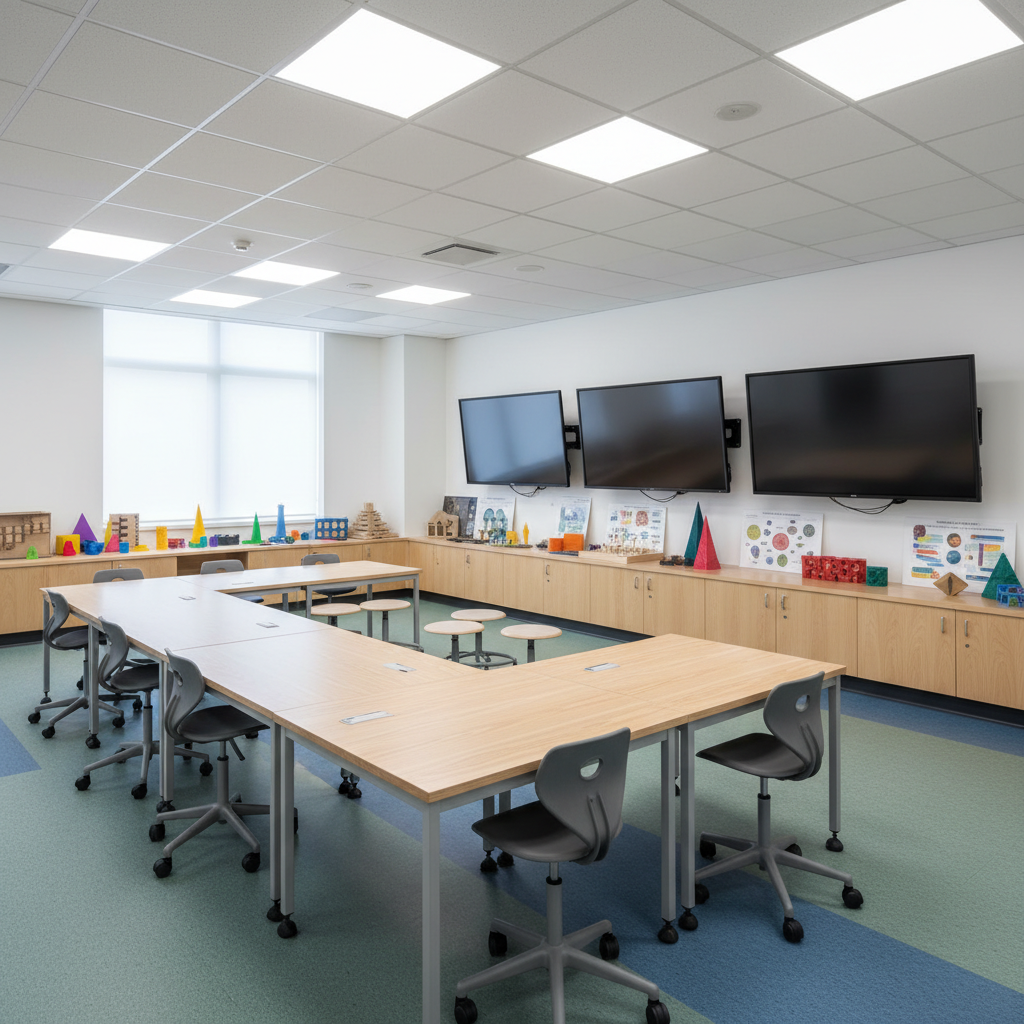
An innovative universal design classroom lab, captured in crisp photographic realism. At the center, a large, U-shaped collaborative workstation with a smooth, light-ash surface accommodates varied seating configurations and open spaces beneath for flexible access. Along one wall, adjustable-height interactive displays with anti-glare glass float above a continuous low ledge holding neatly arranged tactile models and high-contrast diagrams. The flooring features subtle, color-blocked zones that guide movement without becoming visually overwhelming. Soft, even LED panel lighting from the ceiling eliminates harsh shadows, while a distant window introduces a faint hint of natural daylight. Shot from a wide, eye-level perspective, the composition emphasizes flow and adaptability. The atmosphere is quietly innovative and inclusive, designed for diverse learning styles and physical needs while maintaining a clean, sophisticated academic aesthetic.
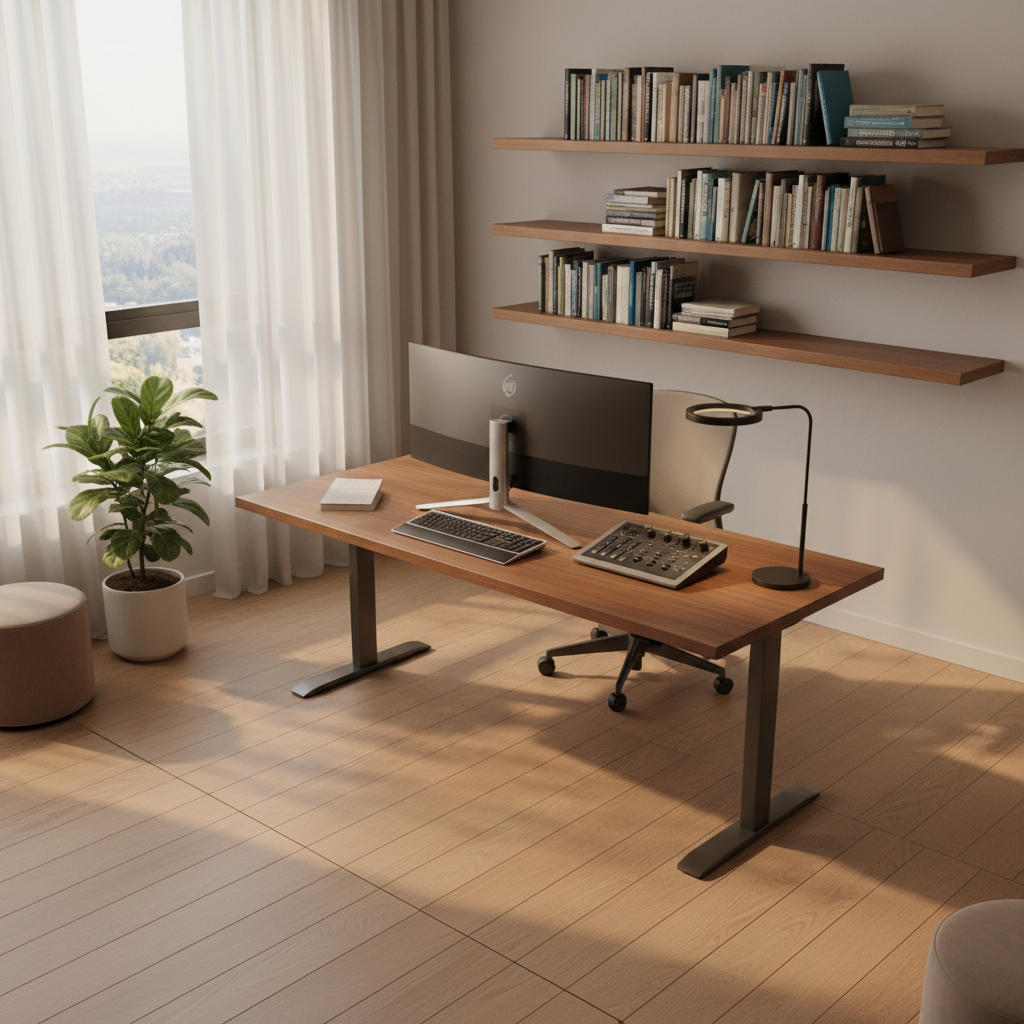
A sophisticated faculty office redesigned with disability in mind, rendered in photographic realism. A broad, height-adjustable desk with a matte walnut finish stands against a wall lined with floating shelves, each holding neatly arranged academic texts. An ultra-wide computer monitor sits on a raised stand, surrounded by a large-print keyboard and a tactile, knob-based audio control device, all in muted, professional tones. The office floor is clear, with smooth, low-contrast transitions between surfaces and a wide turning radius. Late-morning natural light enters through a side window with sheer curtains, supplemented by a dimmable, glare-free task lamp casting soft, directional light. Shot from a slightly elevated corner perspective, the composition feels spacious, calm, and intellectually focused, subtly showcasing ergonomic and sensory accessibility without resorting to clichés.
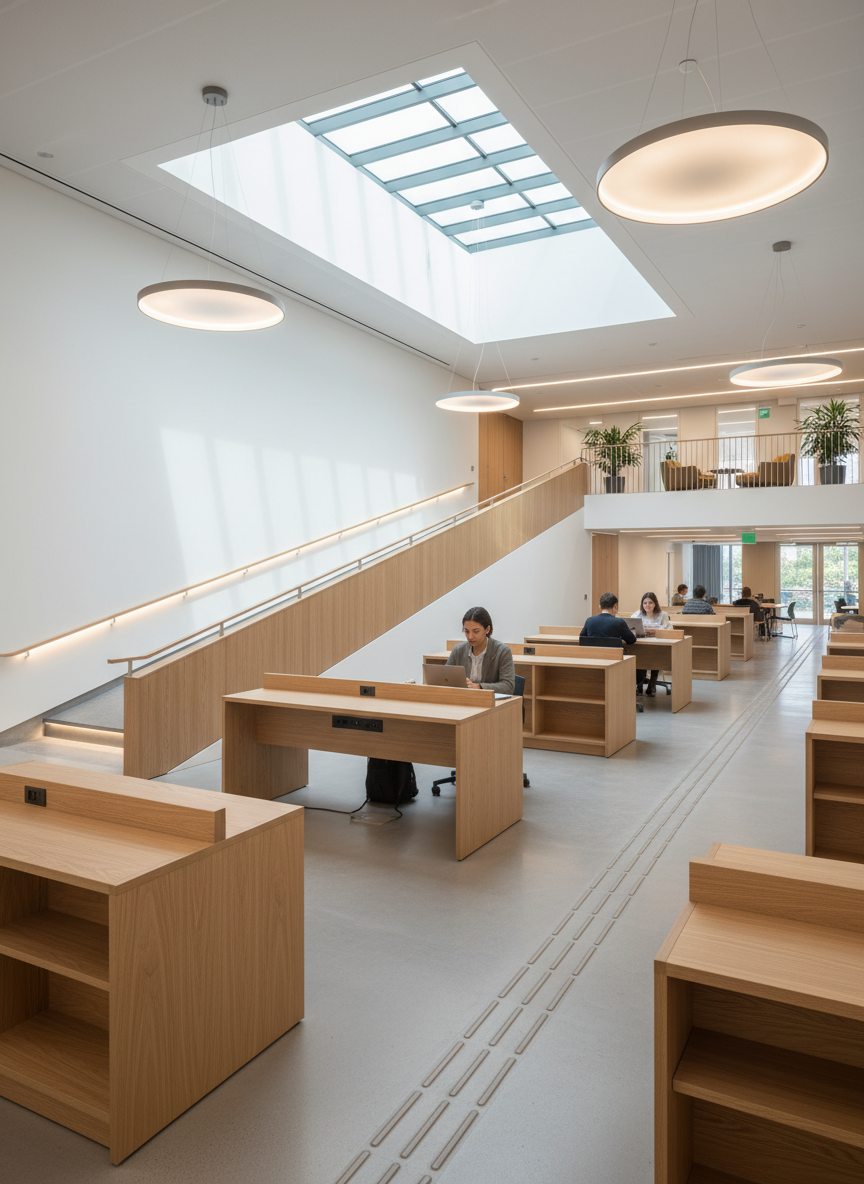
A modern campus library interior featuring an elegant accessibility-focused study zone in photographic realism. Low, broad bookshelves with textured wood veneer create clear sightlines, while adjustable-height study tables with smooth, rounded edges sit beside discreet power modules and tactile wayfinding strips embedded in the floor. A large, gently sloping ramp with minimalist metal handrails leads to a quiet mezzanine filled with natural light from a skylight above. Soft, diffused daylight combines with understated pendant lights, creating a serene, contemplative glow. The scene is captured at eye level using the rule of thirds, with the ramp leading the eye into the frame. The mood is scholarly and inclusive, emphasizing thoughtful design, quiet comfort, and subtle accessibility features rather than obvious disability symbols.